
Fix and Flip ROI: How to Calculate Profit Before You Buy
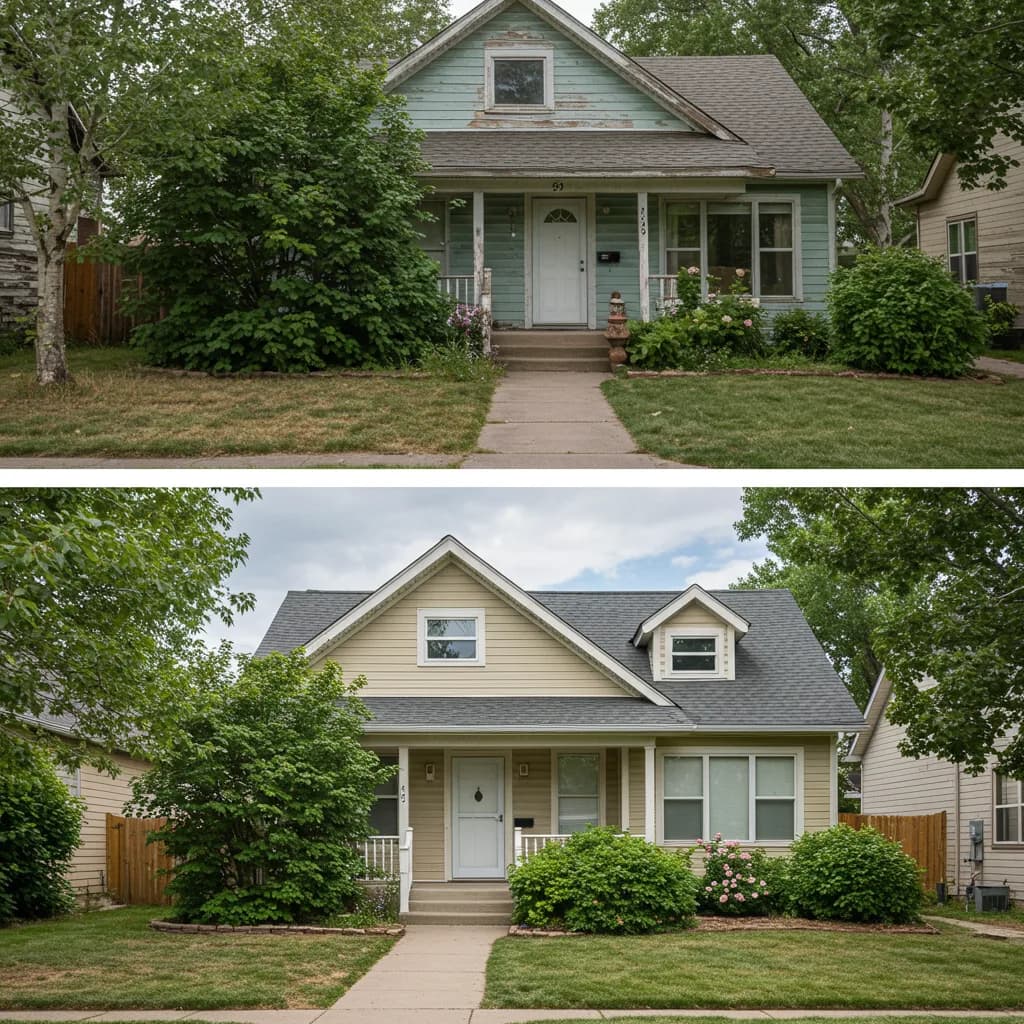
Experienced fix-and-flip investors share one consistent habit: they run the numbers before they fall in love with a deal. The ROI on a fix-and-flip project is not a guess you make after closing. It is a calculation you complete before you make an offer, with every cost accounted for and a realistic exit price based on actual comparable sales.
This guide covers how to calculate fix-and-flip ROI accurately, what costs investors routinely underestimate and how to use the numbers to decide whether a deal is worth pursuing.
All financing facilitated through our network of capital sources. Buckle Up Capital is a broker, not a lender. Business-purpose transactions only.
What Is Fix and Flip ROI?
Fix and flip ROI (return on investment) measures the profit you earned on a project as a percentage of the capital you put in.
The basic formula:
ROI = (Net Profit / Total Investment) x 100
If you invested $80,000 of your own capital in a project and netted $24,000 after all costs, your ROI is 30%.
But the ROI calculation only tells part of the story. An investor who earns 30% over 18 months is doing less well than one who earns 25% in 5 months, because capital velocity matters. Annualized ROI adjusts for time:
Annualized ROI = (ROI / Hold Time in Months) x 12
A 25% return on a 5-month project annualizes to 60%. A 30% return over 18 months annualizes to 20%. Speed is money in fix-and-flip investing.
The Fix and Flip ROI Calculator: All the Costs
Accurate ROI analysis requires accounting for every cost. Most investors who lose money on flips do not lose because they underestimated the rehab. They lose because they forgot about carrying costs, closing costs or they overestimated the after-repair value.
Here is the complete cost structure:
Purchase Costs
- Purchase price: What you paid for the property
- Closing costs (buy side): Title insurance, escrow fees, transfer taxes, recording fees. Typically 1% to 3% of purchase price depending on state
- Inspection: $300 to $600 for a residential property
- Hard money or bridge loan origination: 2 to 4 points on the loan amount
Rehab Costs
- Materials: Flooring, cabinets, fixtures, appliances, paint, landscaping
- Labor: Your GC, subcontractors, permit fees
- Permits: Pull permits for all permitted work. Unpermitted work creates title problems at sale and can trigger escrow holdbacks or deal collapse.
- Contingency: Plan for 10% to 20% of your rehab budget for cost overruns. Experienced flippers add the contingency first, not last.
Carrying Costs (Often the Biggest Surprise)
Carrying costs are the expenses you pay every month you own the property during and after rehab. They are often underestimated because they compound.
- Hard money interest: If you borrow $200,000 at 11% annually, that is $1,833 per month in interest. Over a 6-month project, that is $11,000 just in interest. Over a 9-month project, it is $16,500.
- Property taxes: Prorated for your hold period
- Insurance: Builder's risk or vacant property policy during rehab; standard homeowner policy once listed (some policies switch at listing)
- Utilities: Electric, water, gas during construction and while on market
- HOA fees: If the property is in an HOA
Selling Costs
- Real estate agent commissions: Typically 5% to 6% of sale price split between buyer's and seller's agent
- Closing costs (sell side): Escrow fees, title, transfer taxes. Typically 1% to 3% of sale price
- Staging: Professional staging often adds to sale price; cost runs $1,500 to $5,000 for a full stage
- Price reductions: Budget for the possibility of a price reduction if the property sits. A $10,000 reduction is better than carrying for another 60 days.
- Seller concessions: In a buyer's market, be prepared to cover some buyer closing costs
After-Repair Value (ARV): Getting It Right
ARV is what the property will sell for after all rehab is complete. Overestimating ARV is the single most common cause of poor ROI on fix-and-flip projects.
How to estimate ARV accurately:
Find comparable sales (comps): Look at properties in the same neighborhood that sold in the last 90 days. Match square footage, bedroom and bathroom count, lot size and condition. Adjust for differences.
Use recently sold comps, not listed properties. Listed properties are asking prices, not sold prices. Sold prices are what matter.
Be conservative. If the comparable sales are $290,000 to $310,000 for renovated properties, use $290,000 as your ARV, not $310,000. You get a margin of safety and a better probability of selling at full price.
Run your numbers with a conservative ARV and a tight timeline. If the deal only works with an optimistic ARV and a 4-month flip, you are taking on more risk than necessary.
Work with an experienced local agent. A real estate agent who regularly works with investors in your target market can help you assess ARV before you make an offer. This relationship is worth building.
How Financing Affects Fix and Flip ROI
Most fix-and-flip investors use hard money or short-term bridge financing to purchase and rehab investment properties. Financing dramatically affects your ROI calculation because it determines both your actual capital outlay and your carrying costs. For a full breakdown of ARV, LTC and LTV ratios and how to structure a deal for maximum leverage, see our fix and flip loan guide.
Example with cash purchase:
Purchase price: $150,000 Rehab: $45,000 Carrying costs: $8,000 Selling costs: $18,000 (6% of $300,000 ARV) Total investment: $221,000 Sale price: $300,000 Net profit: $79,000 ROI on $221,000 cash: 35.7%
Same example with hard money at 70% LTV and 3 points:
Hard money loan: $105,000 (70% of $150,000 purchase) Loan origination: $3,150 (3 points) Out-of-pocket for purchase: $48,150 ($45,000 down + $3,150 origination) Rehab: $45,000 (paid from cash or draw) Interest cost (10 months at 11%): $9,625 Carrying costs (non-interest): $5,000 Selling costs: $18,000 Total investment: $126,775 Net profit: $300,000 - $105,000 payoff - $126,775 costs = $68,225 ROI on $126,775: 53.8%
This illustrates why experienced flippers use leverage. The absolute dollar profit was higher on the cash deal, but the ROI and capital deployed were better with the hard money loan. Capital freed up by using leverage goes into the next deal.
The cost of the leverage (interest, points) is real and must be counted. But used strategically, financing improves your overall portfolio ROI by letting you run more projects simultaneously.
For hard money and fix-and-flip financing options in Colorado, visit our hard money loans page and fix-and-flip loan programs.
A Real Fix and Flip ROI Example
Let us walk through a real deal analysis.
Property: 3 bed / 1 bath in Aurora, Colorado Asking price: $220,000 Estimated ARV: $335,000 based on recently sold renovated comps
Rehab estimate:
- Kitchen update: $18,000
- Bathroom remodel: $8,000
- Flooring (full house): $7,500
- Paint (interior + exterior): $4,500
- Landscaping and curb appeal: $3,000
- Roof repair: $5,000
- HVAC service: $1,500
- Contingency (15%): $7,125
- Total rehab: $54,625
Financing: Hard money at 75% LTV on purchase, 11%, 2.5 points
- Loan: $165,000
- Points: $4,125
- Interest (7 months): $10,588
Purchase costs:
- Purchase price: $220,000
- Down payment (25%): $55,000
- Points: $4,125
- Title/escrow at purchase: $2,500
- Total purchase cost: $61,625
Carrying costs (non-interest):
- Insurance (7 months): $700
- Utilities: $1,200
- Property taxes (7 months): $2,100
- Total carrying: $4,000
Selling costs (on $335,000 sale):
- Agent commissions (6%): $20,100
- Closing costs (2%): $6,700
- Staging: $2,500
- Total selling: $29,300
Total costs: $61,625 + $54,625 + $10,588 + $4,000 + $29,300 = $160,138 Loan payoff at sale: $165,000 Sale price: $335,000 Net proceeds: $335,000 - $165,000 = $170,000 Net profit: $170,000 - $160,138 = $9,862 (excluding the initial $61,625 invested which is returned)
Actually, let me restate this more clearly:
Investor cash in: $61,625 (down payment + points + purchase costs) + $54,625 (rehab) + $4,000 (carrying) = $120,250 Loan at close: $165,000 loan repaid from sale proceeds Sale proceeds after loan payoff: $170,000 Net profit: $170,000 - $120,250 = $49,750 (minus the original $120,250 invested)
Wait, that is: net proceeds of $170,000 minus total out-of-pocket cash spent of $120,250 minus selling costs of $29,300 = $20,450 profit.
Let me simplify:
Total money out:
- Cash invested: $120,250
- Selling costs: $29,300
- Total: $149,550
Money in:
- Sale proceeds after loan payoff: $170,000
Profit: $20,450 ROI on cash deployed ($120,250): 17% Annualized (7 months): ~29%
The deal works but is not exceptional. The ARV cushion is enough to absorb surprises, and the annualized return is solid. But if the ARV comes in at $310,000 instead of $335,000, the profit compresses significantly. This is why conservative ARV estimates and realistic timelines matter.
What Is a Good Fix and Flip ROI?
There is no universal answer, but here are some benchmarks:
- Minimum threshold most experienced investors use: 20% ROI on invested capital, or at least $20,000 to $30,000 net profit minimum regardless of percentage
- Strong deal: 25% to 40% ROI on invested capital over a 4 to 8 month hold
- Home run: 50%+ ROI in under 6 months
Markets vary significantly. Denver metro has strong ARVs but competitive purchase prices. Secondary markets in Colorado (Pueblo, Greeley) have lower acquisition costs but also lower ARVs and sometimes longer days-on-market.
The cost of capital also affects what counts as "good." If your hard money rate is 12% and points are 4, you need more margin than an investor borrowing at 10% with 2 points.
FAQ
How do you calculate ROI on a fix-and-flip?
ROI = Net Profit divided by Total Cash Invested, times 100. Net profit is your sale price minus all costs: purchase price, rehab, financing costs, carrying costs and selling costs. Total cash invested is the out-of-pocket cash you actually deployed. Divide net profit by cash invested and multiply by 100 to get the percentage return.
What is a good ROI for a house flip?
Most experienced investors look for at least 20% ROI on their invested capital, or a minimum net profit of $20,000 to $30,000 per deal. On an annualized basis, strong deals return 30% to 60% or more when completed quickly. The right threshold depends on your cost of capital, your local market and how you compare returns against other investment opportunities.
How does hard money financing affect fix-and-flip ROI?
Financing costs money (interest and points) but it also multiplies your return on invested capital by reducing how much of your own money is deployed per deal. Many investors achieve higher overall ROI by using leverage, even though the financing cost reduces their gross profit per transaction, because they can run more deals simultaneously with the same capital base. Always model both the leveraged and unleveraged scenarios.
What costs do fix-and-flip investors most often miss?
The most commonly underestimated costs are carrying costs (interest, insurance, taxes, utilities per month), selling costs (agent commissions plus closing costs are often 8% to 9% of the sale price) and rehab contingency. Most investors who lose money on flips did not account for a longer hold period or a lower-than-expected sale price.
How do I estimate the after-repair value (ARV) on a flip?
Use recently sold comparable properties in the same neighborhood. Match square footage, bedroom and bathroom count and condition. Only use comps sold in the last 60 to 90 days. Be conservative: use the low end of your comp range, not the high end. Consider hiring a local appraiser for a preliminary ARV estimate on larger projects where miscalculating the value would be costly.
Can I flip houses without using hard money loans?
Yes. You can flip with your own cash, with a home equity line of credit (HELOC) on your primary residence, with a conventional investment property loan (though these take longer to close and may not qualify for distressed properties) or with private money from individual investors. Hard money loans are popular because they close fast and are asset-based rather than credit-based, which fits the speed and property-condition profile of most flip opportunities.

Ready to put this into action?
Same-day pre-qualification. No credit pull. 50+ capital sources.
Apply Now