
DSCR Loan Requirements for Rental Property Investors
DSCR loans for rental property qualify on the property cash flow, not your tax returns. We connect investors with DSCR lenders to buy, refinance or cash out without income docs.
Loan Parameters
At a glance
Programs vary by capital source. Final terms disclosed at offer.
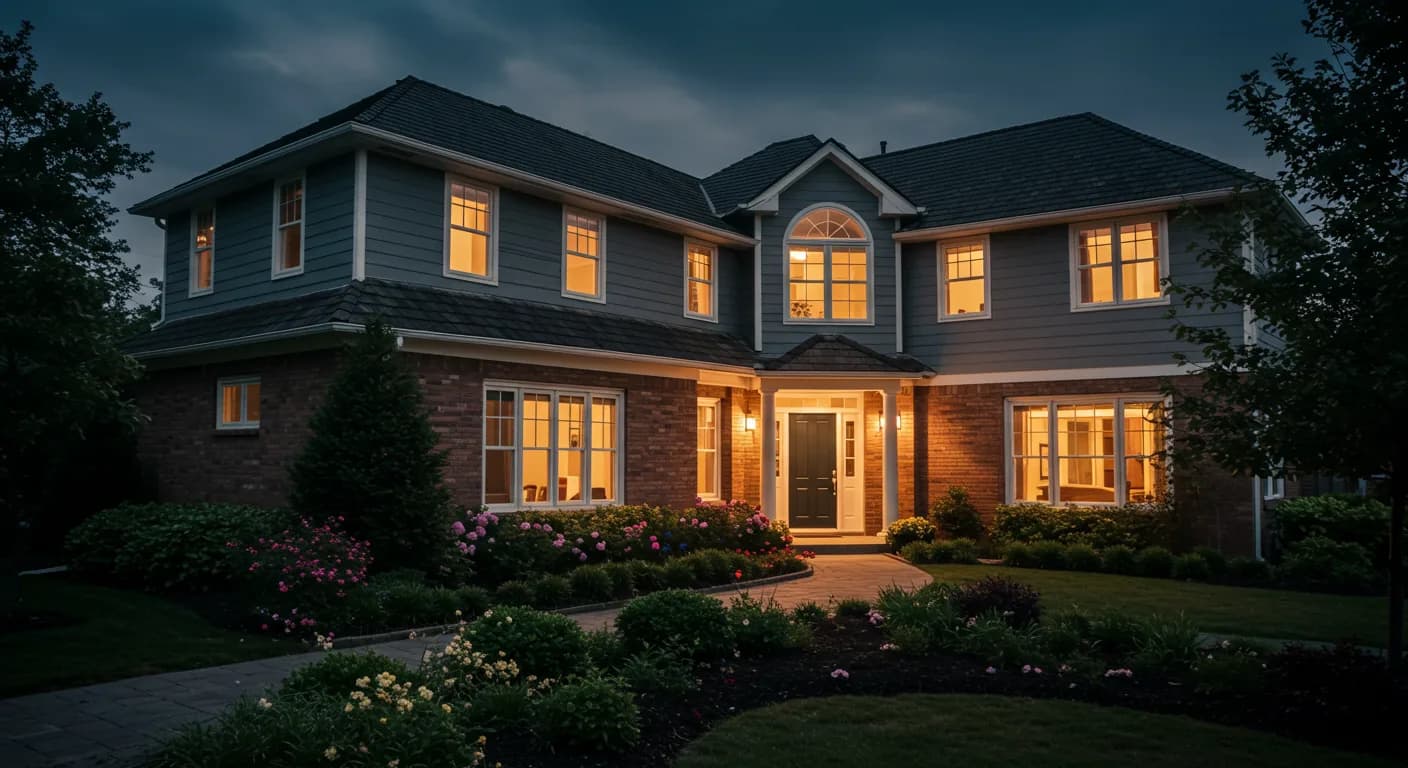
Built for dscr that needs to move fast
A DSCR loan is a rental property mortgage that qualifies on the property's cash flow instead of your personal income. DSCR stands for Debt Service Coverage Ratio, the rent divided by the monthly payment. Because DSCR lenders look at the property and not your tax returns, self-employed investors, portfolio owners and borrowers with complex returns all qualify. DSCR loan requirements are refreshingly simple: a property that covers its payment, a down payment and basic reserves. A DSCR loan is a type of non-QM loan, meaning it sits outside standard conventional home loan guidelines and gives a loan officer more flexibility to underwrite the deal around the real estate itself rather than a W-2.
What is a DSCR loan for real estate investors?
A DSCR loan is a rental property loan designed specifically for real estate investors who earn income from investment properties rather than traditional employment. DSCR stands for Debt Service Coverage Ratio. The ratio compares the gross monthly rent to the total monthly housing expense, including principal, interest, taxes, insurance and any HOA dues. When the rent covers or exceeds that monthly payment, the property qualifies. The investor qualifies by extension, without providing W-2s, tax returns or proof of personal income.
Rental property loans based on DSCR are a straightforward alternative to conventional investment property mortgages. Where a conventional lender requires income documentation that compares personal earnings to personal debt, a DSCR lender asks a simpler question: does this property pay for itself? For investors who are self-employed, who own multiple properties, or who structure income through a business entity, DSCR rental loans eliminate the income documentation barrier entirely.
We connect rental property investors with DSCR lenders in our network who specialize in these products. A 30-year fixed rate, a 5/1 or 7/1 ARM, or an interest-only DSCR loan can each serve different investor strategies. We identify the program that fits your property, your hold strategy and your portfolio goals, and we get you to funding in 21 to 30 days.
DSCR loan requirements for rental property loans
DSCR loan requirements are considerably simpler than those of a conventional investment property mortgage. The primary requirement is that the property generates enough rental income to cover the monthly payment. Most DSCR lenders in our network set the minimum DSCR at 1.0, meaning rent equals the full monthly payment. Many programs prefer a DSCR of 1.20 or higher, reflecting a 20 percent income cushion above the payment. We also work with capital sources that allow DSCR as low as 0.75 for experienced investors with strong reserves.
The down payment required for a DSCR rental loan is typically 20 to 25 percent of the purchase price. A 75 to 80 percent loan-to-value is the standard for DSCR purchase loans. Cash-out refinances require a bit more equity, typically 25 percent. Most programs require at least 3 to 6 months of PITIA reserves held in a business or personal bank account after closing.
Credit score requirements for DSCR loans range from 620 to 680 depending on the program and the loan-to-value. A credit score of 680 or higher unlocks the best rates and the highest leverage. Scores between 620 and 679 are eligible with slightly reduced LTV or higher rates. Stronger credit and a larger down payment together are the two levers that do the most to improve your pricing on any DSCR mortgage loan. No income verification documents are required, which is the main way DSCR income requirements differ from a conventional real estate loan. Apply with property information, an executed lease or market rent appraisal, entity documents for LLC title, 3 months of bank statements and a government-issued ID. Most programs issue a term sheet in 24 to 48 hours. A loan officer on our team reviews the file before submission to confirm it fits the qualification requirements of the program we recommend, since requirements vary meaningfully from one capital source to the next.
How DSCR loans work for rental property investors
The DSCR qualification process starts and ends with the property. When you submit a deal to our network, we calculate the DSCR using the actual monthly rent or, for a vacant property, the market rent supported by the appraiser. Gross monthly rent is divided by PITIA. The resulting number tells the lender whether the property covers its own payment. A property that generates 2,000 dollars in monthly rent and carries a 1,600 dollar monthly PITIA has a DSCR of 1.25, comfortably above the standard 1.0 threshold.
DSCR loans are designed to scale with your rental portfolio. Because DSCR lenders qualify each property on its own cash flow, you are not constrained by the personal debt-to-income limits that block conventional mortgage approvals after 4 to 6 properties. Investors who own 10, 20 or 50 properties can continue adding to their portfolio using DSCR financing as long as each new property meets the DSCR threshold. Title can be held in a single-member or multi-member LLC on most DSCR programs, keeping investment properties separated from personal assets and simplifying your entity structure.
After the DSCR qualification, the loan moves through standard underwriting: a property appraisal, title search, lease review and insurance verification. Because no personal income verification is involved, the underwriting process is faster than a conventional investment property loan. Most DSCR loans close in 21 to 30 days from a complete application. The time from initial submission to funded loan is one of the key advantages for investors who need to close quickly in competitive markets.
DSCR loans vs conventional rental property financing
The fundamental difference between a DSCR rental loan and a conventional investment property mortgage is how each qualifies the borrower. A conventional mortgage requires full income documentation: W-2s, tax returns, pay stubs and a personal debt-to-income ratio that falls within Fannie Mae or Freddie Mac guidelines. An investor who earns income through a business entity, who depreciates rental income on tax returns, or who already owns several financed properties often cannot qualify for additional conventional financing regardless of the rental income generated by the new property.
A DSCR loan removes that barrier entirely. The business case for the loan is the property itself. Its rental income pays the debt service. This is especially valuable for self-employed investors and those who legally minimize taxable income through depreciation and cost segregation, because those strategies that reduce tax liability also reduce qualifying income on a conventional mortgage application.
DSCR loan rates are typically 1 to 2 percentage points higher than conventional investment property rates for equivalent loan-to-value and credit profiles. The premium reflects the no-income-documentation underwriting and the investment property collateral. For most investors, the additional rate cost is a straightforward business decision: pay a slightly higher rate to close a deal that generates positive cash flow, or walk away from a profitable rental property because a conventional lender would not approve the loan. We present rate quotes from multiple DSCR lenders in our network so you can compare the true cost of each program and choose the one that fits your investment strategy.
How to calculate your DSCR before you apply
Calculating your DSCR before you submit a loan application takes five minutes and tells you almost everything a DSCR lender will care about. Start with the property's gross monthly rent, either the amount on the executed lease or the market rent a licensed appraiser would support. Then add up PITIA: principal, interest, taxes, insurance and any HOA or association dues. Divide the rent by PITIA and you have your DSCR. A property renting for 2,400 dollars a month with a 2,000 dollar PITIA carries a DSCR of 1.20, meaning the rental income covers the payment with a 20 percent cushion.
This is the same math a DSCR lender runs during underwriting, so calculating it yourself before you apply lets you know which tier you fall into and what loan terms to expect. A DSCR at or above 1.20 to 1.25 typically qualifies for a lender's best pricing and the most loan program options. A DSCR between 1.0 and 1.20 still qualifies with most capital sources in our network but may carry a slightly higher interest rate. A DSCR below 1.0, where rent falls short of the full payment, requires a program built for that scenario. A handful of capital sources go as low as 0.75, but they typically require a larger down payment, a stronger credit score or additional cash reserves to offset the gap.
If your calculation comes back lower than you hoped, a few levers move the ratio in your favor. A larger down payment lowers the loan amount, which lowers the monthly PITIA and raises the DSCR. Choosing an interest-only payment structure for the early years of the loan reduces the monthly payment without changing the property's income, which also raises the ratio. Rate shopping through our network of capital sources can find a lower interest rate for the same loan amount, and confirming the rent figure with a current appraisal sometimes shows the property supports more market rent than the existing lease reflects. We run this calculation with you before we submit anywhere, so there are no surprises once the file reaches underwriting.
Common reasons a DSCR loan application gets declined
Most DSCR loan declines trace back to a small set of repeat issues, and knowing them ahead of time lets you fix them before they cost you a deal. The most common disqualifier is a DSCR that falls below what the specific program allows, usually because the rent figure used was optimistic rather than appraiser-supported, or because the property carries higher taxes, insurance or association dues than the borrower estimated. Ordering a rent schedule or short-term rental appraisal early avoids this surprise late in the file.
A credit score below a program's minimum credit threshold is the second most common reason for a decline. Since DSCR loans skip income verification, credit score and reserves carry more underwriting weight than on some conventional products. Ineligible property types also sink applications. Not every property qualifies for every DSCR program. Rural properties, properties on more than a few acres, unique or non-warrantable condos and mixed-use buildings with significant commercial square footage fall outside standard DSCR guidelines and need a specialty capital source. Titling issues cause declines too. Attempting to close in a newly formed entity with no operating history, or in an entity structure a particular lender does not allow, can stall or kill a file. We check the entity structure, the property type and the reserve position against the specific program's guidelines before we submit, which is why files we package rarely stall in underwriting for avoidable reasons.
When DSCR fits
Buy Long-Term Rentals
Purchase 1–4 unit investment properties without providing W-2s, tax returns, or employment verification.
Refinance Out of Hard Money
Replace short-term hard money debt with a long-term DSCR loan once the property is stabilized or rehabbed.
Cash-Out for Next Acquisition
Pull equity from an existing rental to fund your next down payment or deal.
Portfolio Loans
Finance multiple properties in a single closing with blanket DSCR structures. Simplify your portfolio financing.
From inquiry to funded
Submit property address, purchase price or current value, and expected rent
We calculate DSCR and match you with the right program
Term sheet in 24–48 hours
Underwriting: appraisal, title, lease review or rent schedule
Close in 21–30 days
What you’ll need
Have these ready and we move 50% faster.
Property information
Executed lease agreement or rent schedule
Borrower entity documents
3 months bank statements
Government-issued ID
Insurance quote
DSCR questions
All loans facilitated by Buckle Up Capital are for business / commercial purpose only. Not a lender.
Ready to fund your next deal?
Get a same-day quote on dscr loans for rental property. No credit pull. No commitment.
Get Funded